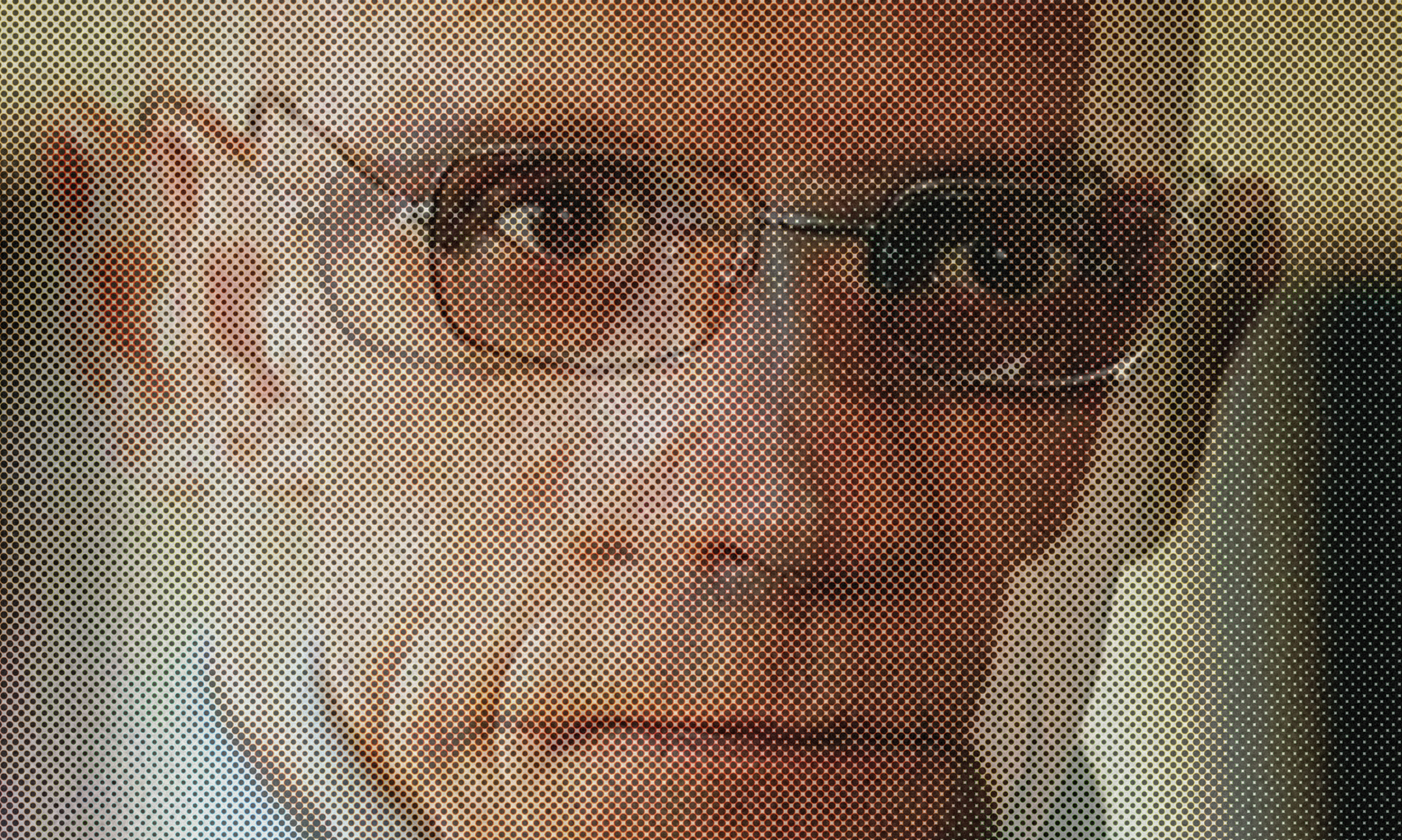
Finding Foucault:
Workshop on the material traces of his thought, from Poitiers to Paris
organized by Rajesh Heynickx, Gjiltinë Isufi and Willem Styfhals.
On the 14th of June, 2024, we gathered in Leuven to discuss the material traces of Michel Foucault, starting from his young years in Poitiers to the end of his life in Paris. We had the pleasure to start the morning with a presentation from Jean-François Bert from the University of Lausanne. Bert is a sociologist and historian of the social sciences, and Professor of the Anthropology of Knowledge at the University of Lausanne in Switzerland. He presented ‘Les fiches de Foucault ou l’espace graphique de la pensée’ (Foucault’s ‘fiches’ or the graphic space of thought), sharing his thorough analysis of the overlooked traces in Foucault’s note-taking practice.
Afterwards, we continued with the keynote speaker, Michael C. Behrent. Behrent is Professor at Appalachian State University, where he teaches on modern European history, the history of European thought, the Western intellectual tradition, and modern French history. During the seminar, he spoke of the formative spatial and intellectual context of Foucault’s early years, as explored in his recently published book Becoming Foucault: The Poitiers Years. To dive deeper into the spatial and material exploration of Foucault, we moved to the presentation of Rajesh Heynickx and myself. We presented ‘Rue de Vaugirard 285: a lieu de savoir‘, starting with a spatial analysis of Foucault’s apartment in Paris. In this presentation, we focused on an immediate context of intellectual history: the secluded private spaces where ideas are produced, through which we tackled the underexplored zone between Foucault’s biographical highlights and his textual oeuvre.
The seminar continued with Tivadar Vervoort’s ‘Foucault and Reification: A power-theoretical critique of social forms’, Gideon Boie’s ‘Finding Foucault in Brussels Today’, and finally, Lieven de Cauter’s ‘The Rise of Zoöpolitics: On Urbanism and Warfare’. After a closing word by Willem Styfhals, we moved upstairs to visit the archive and desk of Edmund Husserl, philosopher and mathematician who established the school of phenomenology.


 gjiltinë